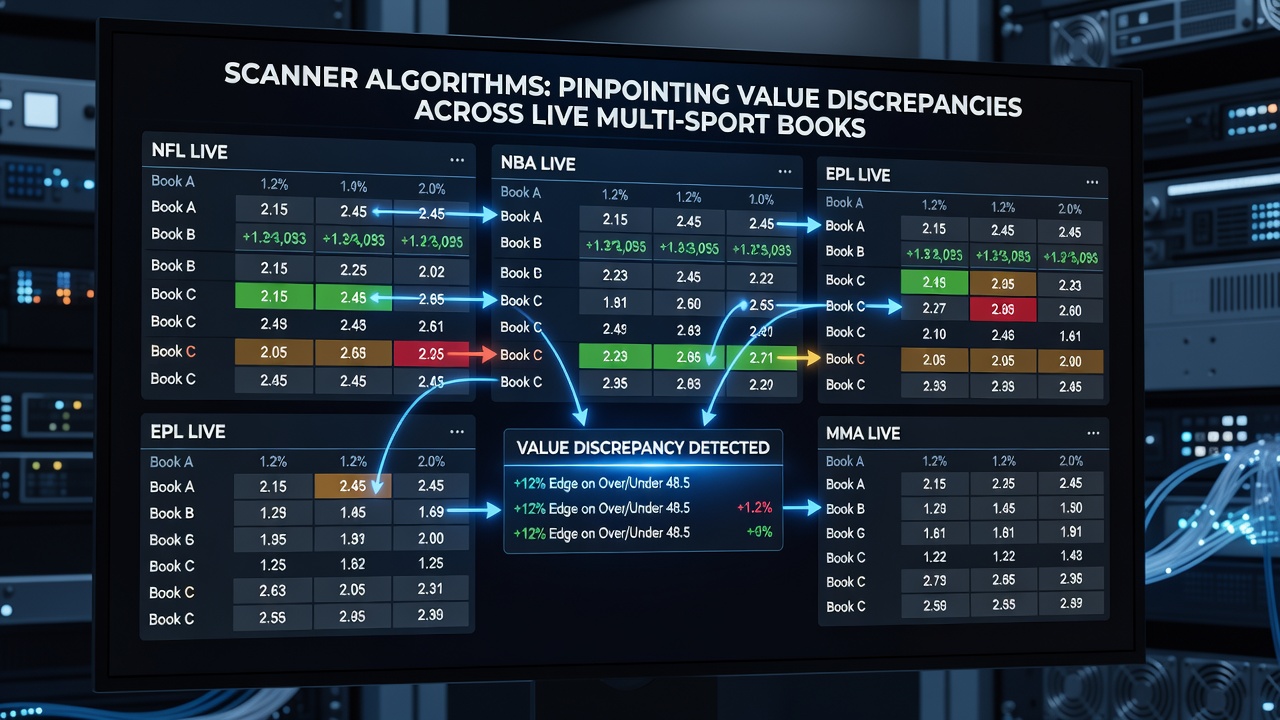
Algorithmic Detection of Value Gaps in Live Sports Betting Across Global Markets
Scanner algorithms process massive streams of live odds data from dozens of sportsbooks simultaneously, identifying price differences that emerge during ongoing matches in football, tennis, basketball, and other major sports, while data from August 2026 shows increased scanning activity ahead of several international tournaments. These systems compare decimal, fractional, and American formats in real time, converting them into standardized probabilities so that discrepancies become visible within seconds of an odds update.
Core Mechanics Behind Live Odds Scanning
At the foundation, these algorithms pull feeds through APIs or web scraping protocols, then apply normalization layers that account for bookmaker margins and currency variations before flagging potential value gaps. Researchers at several European institutions have documented how machine learning models trained on historical line movements can predict when certain markets, such as tennis set handicaps or basketball player props, are likely to diverge across operators. The process runs continuously, refreshing every few seconds during live events rather than relying on static pre-match snapshots.
One study released by the American Gaming Association examined data volumes handled by commercial scanners in 2025, noting that peak loads during NBA and Premier League seasons exceeded 2 million odds updates per hour across monitored books. Algorithms discard redundant entries and apply statistical filters to isolate differences that exceed a predefined threshold, usually expressed as a percentage edge after margin removal.
Multi-Sport Coverage and Market Depth
Modern scanners extend beyond headline markets into niche segments including corner counts in football, point spreads in lower-tier basketball leagues, and game-by-game totals in tennis. Coverage expands during summer months when overlapping schedules in cricket, baseball, and volleyball create additional data points for cross-comparison. Observers note that August 2026 schedules featured unusually dense fixture lists, prompting operators to widen market offerings and thereby increasing the raw material available for algorithmic detection.
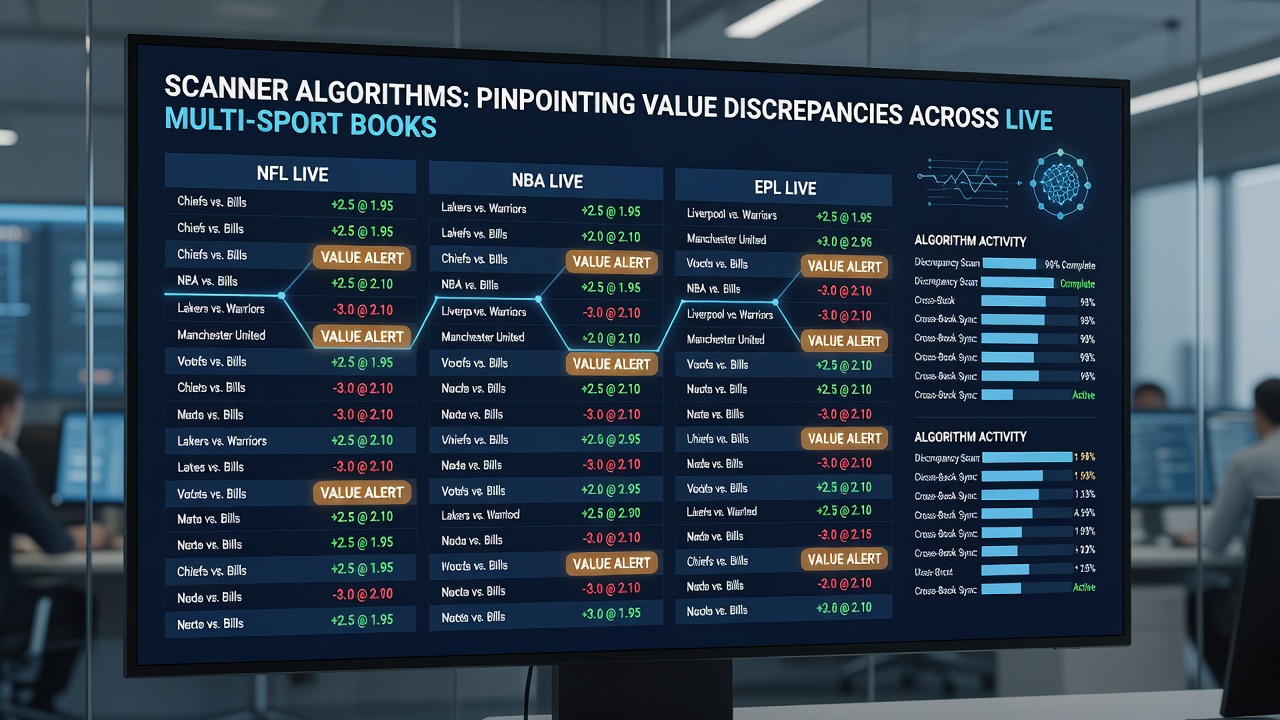
Specialized modules handle sport-specific variables such as serve speed fluctuations in tennis or timeout impacts in basketball, adjusting probability models accordingly. Those who have examined scanner output logs report that the highest frequency of flagged discrepancies occurs in the final 10 to 15 minutes of close contests, when bookmakers adjust lines at different speeds. The systems maintain separate queues for each sport to prevent slower-updating markets from delaying alerts on faster-moving ones.
Integration With Calculators and Risk Filters
Once a discrepancy surfaces, integrated calculators compute stake distributions across the identified books to lock in a theoretical profit margin, factoring in commission rates and maximum bet limits. Risk management layers then apply liquidity checks and historical reliability scores for each bookmaker before presenting the opportunity. Data from Australian regulatory filings indicates that licensed operators experienced a measurable rise in automated betting traffic during 2025-2026, consistent with wider scanner adoption.
Additional filters remove opportunities that fall below minimum profit thresholds or involve books with temporary suspension histories. The algorithms also track line movement velocity to distinguish between fleeting pricing errors and sustained value gaps that persist long enough for execution.
Conclusion
Scanner algorithms continue to evolve alongside improvements in data latency and machine learning accuracy, enabling systematic identification of value discrepancies across an expanding range of live sports markets. Reports from bodies such as the Australian Gambling Research Centre and industry technology reviews show steady growth in the infrastructure supporting these tools through 2026. The combination of real-time feeds, normalized probability models, and automated stake calculators forms the operational backbone for detecting and acting on odds variations in multi-sport environments.