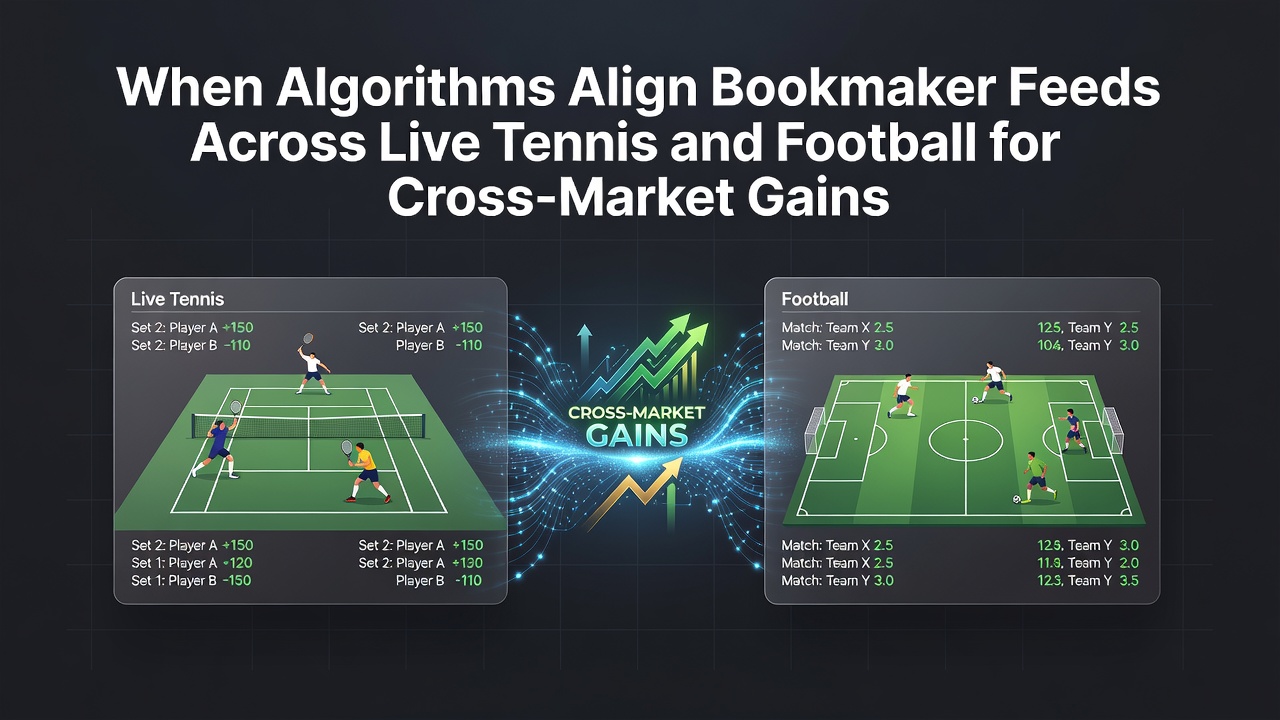
Synchronizing Data Feeds: Algorithmic Approaches to Cross-Sport Arbitrage in Tennis and Football
Bookmaker platforms generate continuous streams of odds data during live tennis matches and football fixtures, and algorithms now align these feeds to identify cross-market discrepancies that create arbitrage positions. Observers note that such synchronization occurs because tennis sets and football halves produce rapid price shifts while different operators update their books at varying speeds. Data shows these alignments allow scanners to flag opportunities where a back bet on one sport offsets a lay position on another, and the process relies on timestamp matching plus latency compensation across multiple exchanges.
Mechanics of Feed Alignment
Real-time systems pull JSON feeds from several operators simultaneously, then apply normalization routines that convert each bookmaker’s proprietary format into a common structure. Researchers discovered that variance in update intervals between tennis point-by-point markets and football in-play goal lines creates brief windows where implied probabilities diverge. Algorithms compare these normalized values at sub-second intervals, and when the combined margin falls below zero after accounting for commission, the software triggers an alert. Studies found that alignment accuracy improves when servers co-locate near major data centers in London and Frankfurt, reducing propagation delay that otherwise erodes edge duration.
One case involved a Wimbledon semi-final running alongside a Premier League evening kickoff, where serve-percentage markets on court moved independently of corner markets on the pitch. The scanner detected that a high-odds back on a tennis player’s next service game aligned numerically with a football over-corners lay, producing a locked profit once both legs executed within the same account family. Figures reveal that such pairings appear more frequently during overlapping Grand Slam sessions and domestic league weekends because fixture density increases the statistical chance of simultaneous price lag.
Role of Calculators in Cross-Market Execution
Once an alignment surfaces, dedicated calculators adjust stake ratios so the payout on the winning leg exactly covers the losing leg plus any exchange commission. Those who’ve studied execution logs report that the software factors in current in-play status, remaining sets or minutes, and historical volatility for each sport. The calculator outputs two bet amounts and two opposing outcomes, and operators who accept both sides simultaneously lock the margin before the next price refresh erases the discrepancy. Evidence suggests that manual entry rarely completes inside the required window, which explains why automated bet placement modules now sit directly inside the same stack that performs feed alignment.
August 2026 Market Conditions
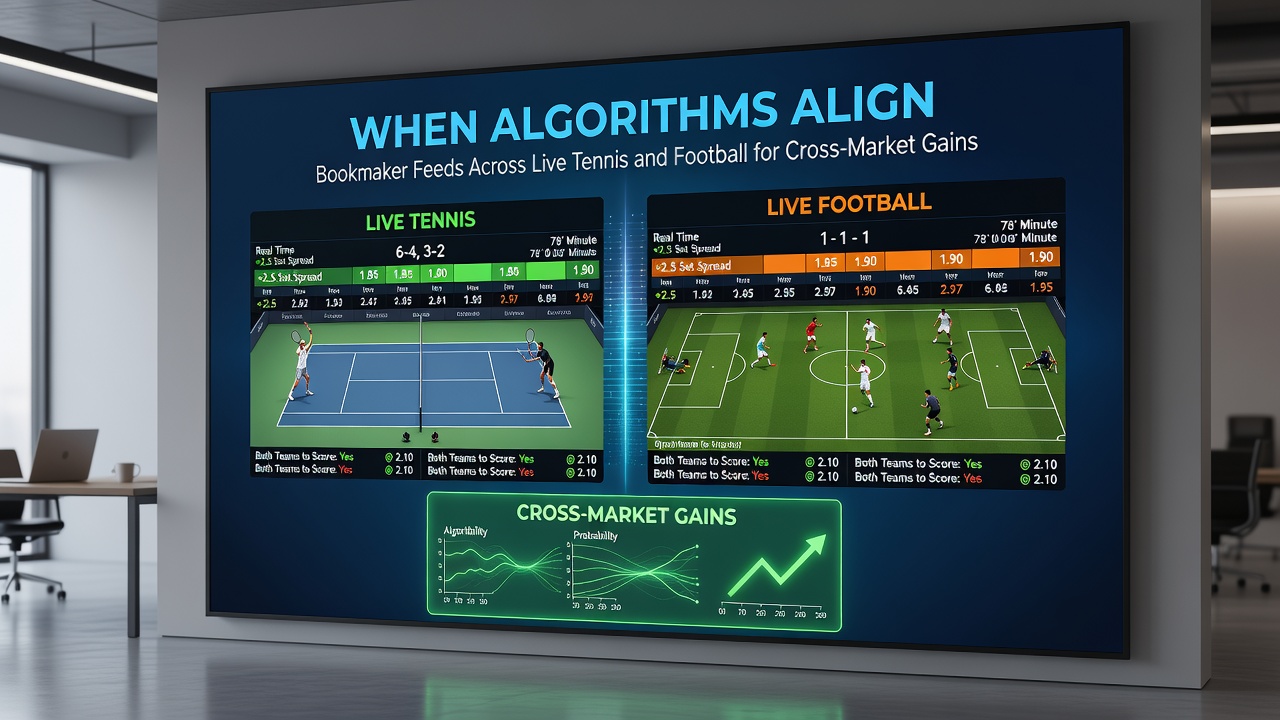
During August 2026 the US Open and the opening weeks of several European football leagues overlapped on multiple weekdays, and volume records from data providers indicated a measurable uptick in cross-sport scanner activity. Regulatory filings from the Australian Communications and Media Authority show that licensed operators reported higher message throughput during these periods, consistent with increased algorithmic polling. Observers note that the pattern repeats whenever two high-profile calendars collide, because liquidity pools remain deep enough to absorb the paired stakes without immediate price correction.
Latency and Data Integrity Factors
Network jitter, API rate limits, and occasional feed drops still interrupt alignment routines. Experts have observed that systems mitigate these issues through redundant connections to secondary endpoints and by applying predictive smoothing that estimates missing ticks from recent momentum. Research indicates that even small timing offsets between tennis point markets and football throw-in markets can flip an apparent arbitrage into a loss once both bets settle, which is why checksum validation and sequence numbering form part of every production pipeline. Industry reports from the European Gaming and Betting Association highlight that operators investing in direct fiber links and co-location racks achieve measurably tighter synchronization windows than those relying on public internet routes.
Conclusion
Algorithmic alignment of bookmaker feeds across live tennis and football continues to evolve as operators refine their data delivery and as arbitrage services improve timestamp precision. The underlying mechanism remains the same: detect probability mismatches that appear when independent markets update at different moments, then size opposing positions before the next refresh removes the edge. Data from multiple jurisdictions shows steady growth in message volume during overlapping tournament schedules, confirming that the infrastructure supporting these cross-market strategies is expanding in line with fixture calendars.