When Bookmaker Feeds Diverge: Using Aggregation Tools to Pinpoint Edges in Niche Sports Markets
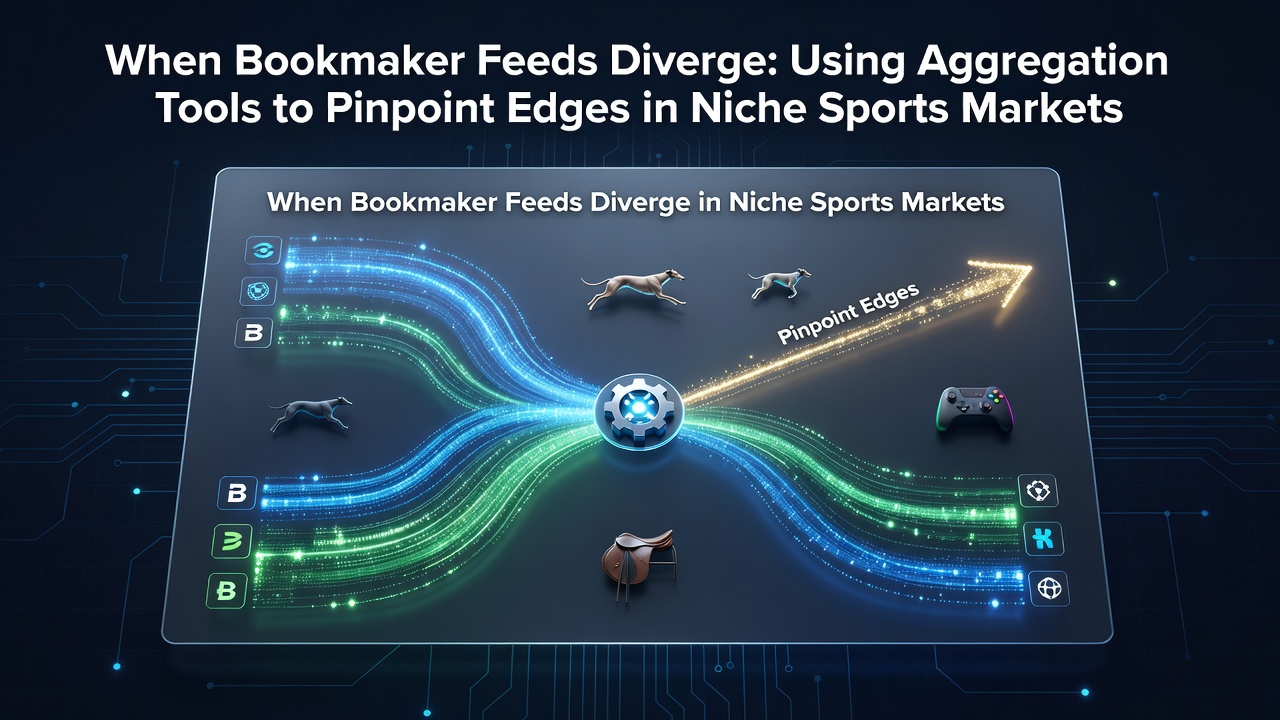
Data aggregation platforms collect real-time odds from various operators and highlight discrepancies that emerge when individual bookmaker feeds process information at different speeds or rely on separate data sources. In niche sports such as handball leagues across Scandinavia, futsal competitions in South America, and lower-division volleyball circuits in Eastern Europe, these divergences appear more frequently because liquidity remains lower and fewer traders monitor the lines continuously.
How Feed Divergence Develops in Smaller Markets
Bookmakers source their data feeds from multiple providers, and each provider updates statistics or injury reports according to its own schedule. When one operator receives a late roster change in a Polish Ekstraklasa handball match while another still operates on earlier information, the resulting odds can differ by several percentage points. Aggregation tools scan dozens of these sources simultaneously, flag the variance, and present it alongside historical movement data so users can evaluate whether the gap reflects genuine information asymmetry or simply delayed synchronization.
Researchers at the University of Sydney documented similar patterns in Australian NBL1 basketball matches during the 2025 season, noting that smaller regional operators often lagged behind larger European books by several minutes when incorporating live scoring updates. The study tracked more than 1,200 games and found average divergences of 4.2 percent in moneyline markets during the first quarter, narrowing only after additional data streams aligned.
Role of Aggregation Software in Identifying Value
Modern aggregation platforms combine odds streams with supplementary datasets such as weather reports for outdoor events, travel schedules for touring teams, and even social-media sentiment indicators. Users configure alerts that trigger when a specified threshold is crossed in a chosen niche market, for example a 3 percent deviation in set-total markets during international badminton tournaments. The software then displays the best available price alongside the aggregated average, allowing rapid comparison without manual checking of each bookmaker site.

During October 2026, several European futsal leagues reported unusually high numbers of postponed matches because of venue issues, and aggregation services captured the resulting price swings across Spanish and Portuguese operators within minutes of each announcement. Observers note that traders who combined these alerts with basic venue-capacity data were able to locate discrepancies before the broader market adjusted.
Practical Applications Across Specific Niche Sports
Table-tennis events at the Challenger level provide another illustration. Multiple smaller Asian and Eastern-European books publish lines hours before larger global operators, creating windows where aggregated data reveals mispricings in individual game totals. Users who maintain custom filters for these tournaments receive notifications that include both the raw price difference and a confidence score derived from historical accuracy rates of the involved bookmakers.
Industry reports from the Canadian Gaming Association indicate that participation in niche-sport wagering grew 18 percent year-over-year through mid-2026, with aggregation tools cited as a primary driver because they reduce the time required to monitor fragmented markets. The same reports highlight that operators in Canada and Australia have begun integrating their own feeds into third-party aggregators to increase visibility and reduce the frequency of large discrepancies.
Limitations and Data-Quality Considerations
Aggregation tools depend on the quality and timeliness of the underlying feeds. When a bookmaker temporarily suspends a market or experiences API latency, the aggregated view can display stale information that no longer reflects current conditions. Users therefore cross-reference outputs with direct bookmaker pages or secondary sources before committing capital. Academic papers from the University of Melbourne emphasize the importance of maintaining multiple data-validation layers, particularly in low-volume sports where single erroneous updates can distort the entire aggregated picture for several minutes.
Conclusion
Aggregation platforms continue to expand coverage into additional niche disciplines, incorporating machine-learning filters that learn from past divergence patterns and refine alert thresholds accordingly. As more operators connect their feeds to these systems, the frequency and magnitude of discrepancies may decrease, yet the underlying process of comparing asynchronous data streams remains a core method for locating pricing inefficiencies across less liquid sports markets.